Thank you to the people who reacted with enthusiasm to my mad idea! It makes me much more excited about sharing it.
Since my last post, I more or less threw all of my plans out of the window and ended up thinking about walking in Regency clothes. And specifically, shoes. For a walk nowadays I wear hiking boots or low trainers. Made of Gore-Tex and rubber, they are waterproof, have a sole with grip, are nicely padded and have ankle support. While I could hide them under the dress, they wouldn't be in keeping with the project. For the proper experience I think the footwear is particularly important. We can imagine the sort of issues a walk in a long dress would cause - snagging, tripping, stiles etc. The shoes add other challenges, like slipping and twisting ankles. Bear in mind that if your shoe gets punctured by something, an infection could kill you!
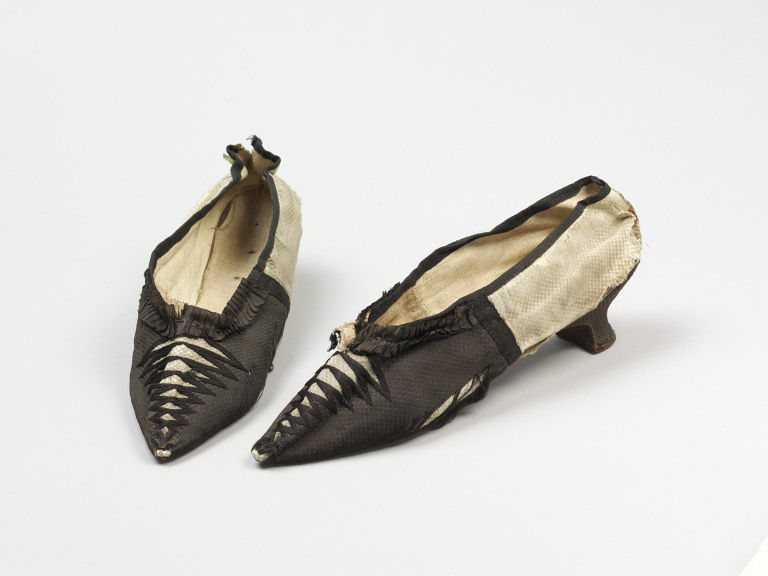 |
| Shoes, 1790s, black and (very faded) blue. |
Shoes would have been made of leather, possibly with cloth uppers. Experiments with country dancing demonstrations on paving show that the soft leather soles of my ballet shoes did not last long. Similar experiments on grass indicate that leather dancing shoes also don't do well on wet surfaces - they're slippery and not waterproof. At least country dancing does wonders for the strength of your ankles. While the paving may have been less of an issue (no tarmac or concrete roads), Lizzy definitely encountered plenty of mud.
Buckle up for a history of shoes from the V&A archives! (all images from V&A unless otherwise indicated). Caveats here are that I'm not a historian of any fashion, I have only researched museum collections online, and that utilitarian shoes are less likely to survive than pretty ones.
In the 1797, when Jane Austen was writing the first version of Pride and Prejudice, we have pointy toes and small heels (as opposed to big heels earlier in the century). Boots for ladies had been used for riding for a while, but now started to be used for other purposes. The American Duchess historical shoe blog seems to date their leather half-boots as accurate from 1790, and has leather Hessian-style boots for the same date. Maybe Elizabeth would have worn boots, like the ones from the Met below.
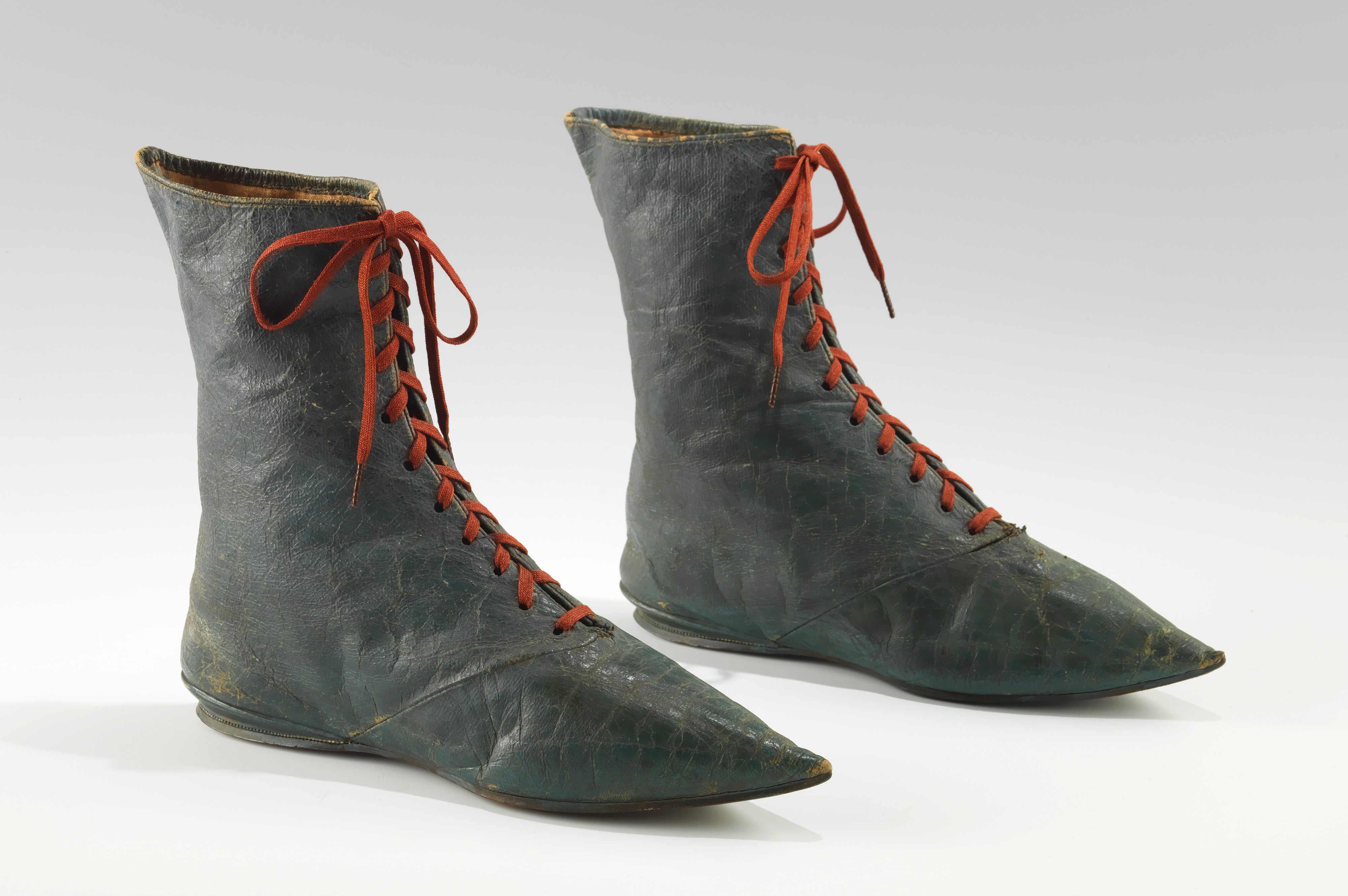 |
| Leather boots from 1795-1815, with pointy toes and a small heel. The Met museum |
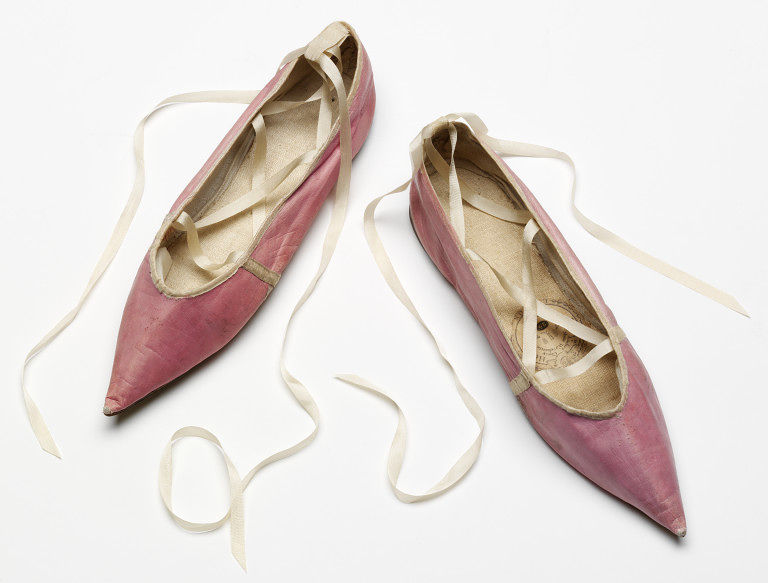
As we get into the 1800s shoes get simpler, with more rounded and later square toes and lower heels or entirely flat. Still not something you'd go for a muddy walk in. They look more like ballet pointe shoes than a modern outdoor shoe, especially with the ribbons. Until the 1850s, this type of shoe (black or white mainly) was worn at formal occasions.
 |
| White leather shoes worn by a bride in 1810 |
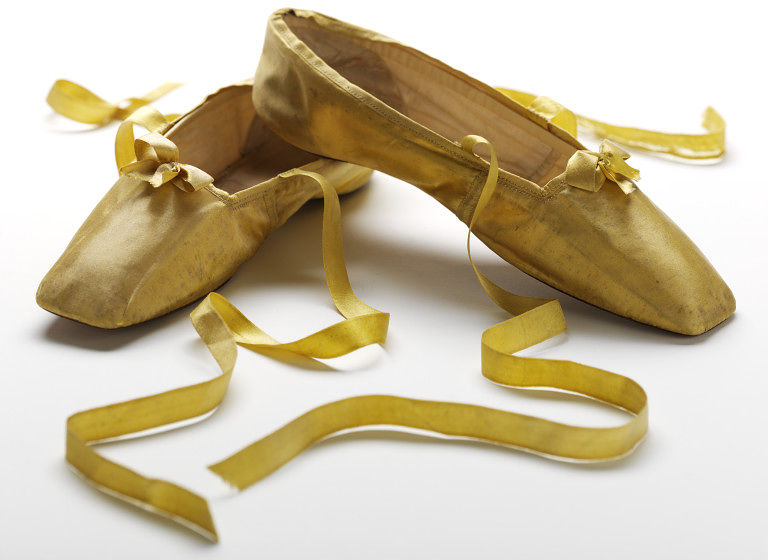 |
| Yellow satin shoes with ribbons, 1820s |
The good news is that at this point, boots become properly acceptable for women. They would have had leather soles and a kid leather or cotton upper. The cotton was a specific type from the Nanking region of China with a natural buff colour, and known as nankeen.
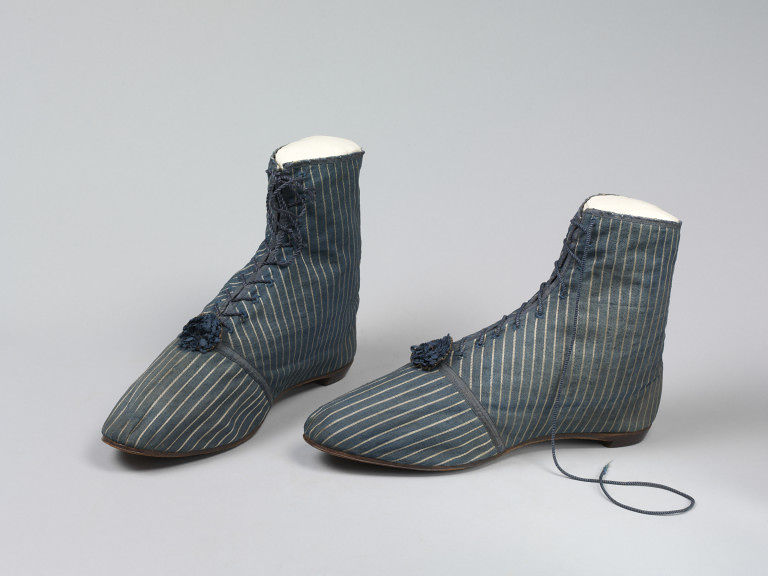 | |
| Ladies' half-boots in blue cotton |
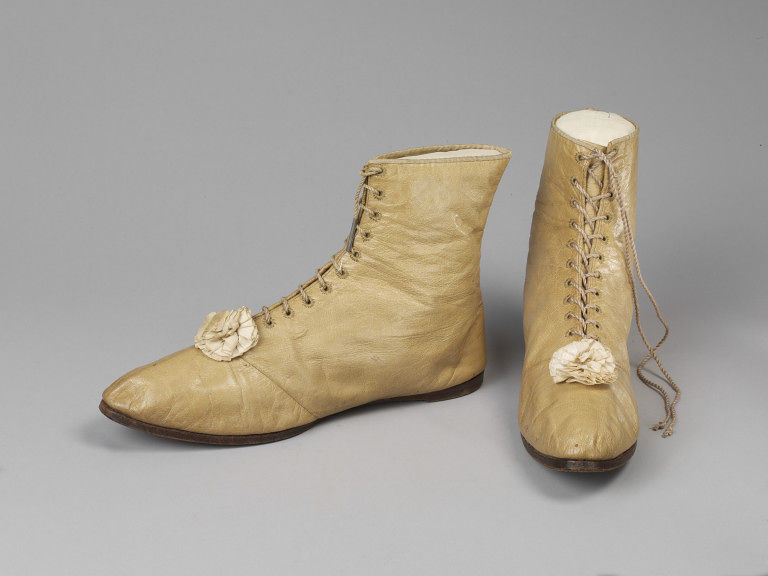 |
| Kid (goat, not child) leather ladies' half-boots, 1815-1825 |
So what should I wear to best channel Lizzy on a three-mile walk to my local Netherfield? American Duchess tried to produce both leather and nankeen half-boots, but they are no longer in the collection and I suspect the shipping would have been prohibitive. I think the materials are more important to the experience than the exact style. Helpfully I seem to have found a modern 'nankeen half-boot' in high-top jazz dance shoes, with a leather sole, cotton lining and either cotton or leather upper. I will probably waterproof them with wax and possibly glue an extra leather sole on. For bonus points, they're affordable enough to potentially ruin on a muddy walk.
I totally recommend having a poke around the museum collections online, it certainly entertained me for a couple of evenings. I was absolutely astonished at how clumsy shoes look until the late 1800s.
Finally, two little asides I found in this rabbit hole:
These mens' shoes look perfect for Mr Collins to tend to his garden in, and are some of the few examples available for men:
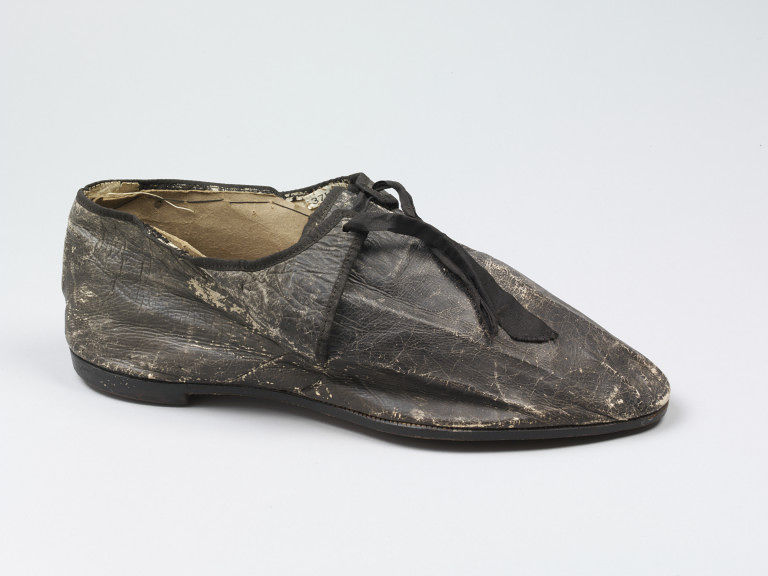 | |||
| A man's shoe, black with ribbon tie closure |
And a pair of 2000 year old shoes that honestly would look less out of place in a modern shoe shop than most of the other shoes in this post, and clumsy-looking later examples. I have a mighty need and may buy some leather flats to embellish with gold leaf (or paint). Because clearly I don't have enough projects.
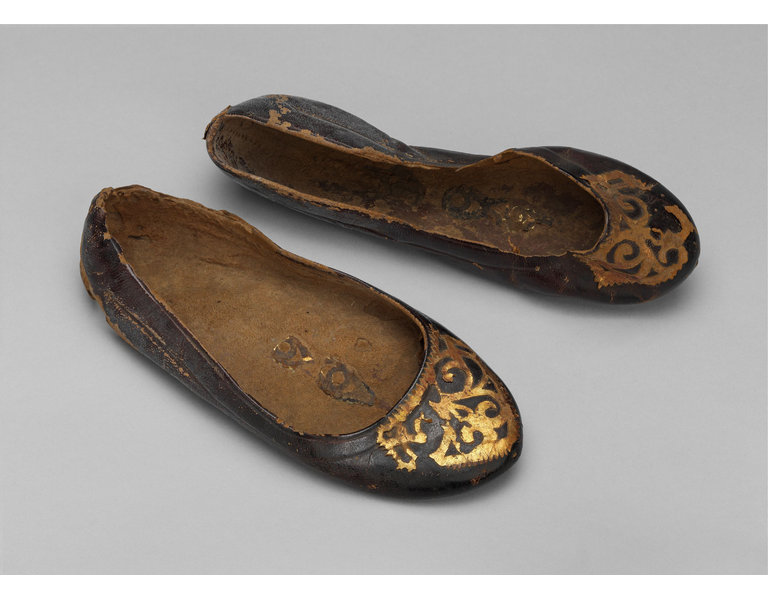 |
| pair of surprisingly modern-looking shoes, 30BC-300AD, Egypt. |

Hi. Thank you for the article. How did they tie ribbon on the shoe? I went to an exhibition of a a local gentry woman Jenny Townsend and she wore yellow shoes for her wedding with a yellow dress.
ReplyDeleteI'd love to see an exhibition like that, where was it? I think they probably sewed the ribbon on like we still do with ballet shoes.
DeleteThis comment has been removed by the author.
ReplyDeleteHi. I went to mompesson house last Christmas where the house dedicated an exhibition to Jenny Townsend who lived there with her family and then her husband with her family . The theme was a Victorian Christmas. Games included having to keep in character for as long as possible and the servants life’s. Jenny was the only daughter to have married.
ReplyDeleteI'll have to see if they do that again once they reopen!
DeleteHi. Yes do. They change the exhibitions at the house but there was a reference to Jane Austen herself.
ReplyDelete