Showing posts with label four-and-twenty families. Show all posts

19 September 2020

What is genteel?

 “He is a gentleman; I am a gentleman’s daughter. So far, we are equal.”

“True. You are a gentleman’s daughter. But who was your mother? Who are your uncles and aunts?”

A lot has been written on the topic of gentility in the context of Jane Austen’s novels. I will not rehash all of it here, but attempt a summary to ensure future posts where I discuss particular characters make sense. Feel free to skip this post if you are a Republic of Pemberley stalwart, or correct me where I’m wrong. The examples I give here will be from the novels. If you want to read about real examples, I recommend ‘A Gentleman’s Daughter’.  

The English society in the Regency looked like a pyramid:

Figure 1: a clumsily drawn (by me) pyramid diagram of society as explained in the text below. 

Royalty 

The royal family, basically one extended family which also encompasses some of the nobility. 

Nobility

300 or so titled families, i.e. Duke/Duchess, Marquess/Marchioness, Earl/Countess**, Viscount(ess) and Baron(ess). 

Landed Gentry

“Approximately (in 1803) 540 baronets, 350 knights, 6000 landed squires and 20,000 gentlemen” totalling 1.4% of the population, ~27000 families (numbers of nobility and gentry from: Thomas Keymer, Rank, in Jane Austen in Context, ed. Jane Todd, Cambridge University Press, 2005). 

Clearly, there are distinctions within this class as Lady Catherine points out. She and her sister are daughters of an earl Fitzwilliam, and their brother is Col. Fitzwilliam’s father. Note that both the “respectable, honourable, and ancient -- though untitled -- families” the earl’s daughters married into have names of French origin: Darcy (D’Arcy) and De Bourgh. Presumably this means the families have come over not long after the Norman conquest (1066 and all that) which would make them properly ancient by 1800. 

The estate (a word now more associated with last will and testament situations) will usually have included a house, park, farmland often worked through a ‘home farm’, possibly a village (which is why Mr Bennet can threaten to not allow officers in the village, although he probably wouldn’t be able to enforce it), hunting and shooting rights and possibly the advowson. In return the head of the family would be expected to look after tenants and the poor, possibly settling disputes as justice of the peace. The incomes associated with estates are rental income (from farmland etc.). 

People who have made enough money can purchase an estate and become ‘landed’, which is what Sir William Lucas and Mr Weston have done and Mr Bingley aspires to. These would become available as current owners have no heirs or fall into financial difficulty. However, in the same way that everyone knows anyone’s income, their ancestry would be known, so purchasing an estate was no magic bullet to respectability. 

Genteel professions 

These are the professions deemed suitable for the younger sons of the gentry, i.e. those not inheriting an estate. The distinction is that for genteel professions, technically one wasn’t paid, but got a stipend, dividend or some sort of living in kind. Marrying rich was definitely prudent as the income did not support the lifestyle to which one had become accustomed. 

Army and Navy officers: one needed to buy and sell these jobs, which meant a lump sum was required to start, and more lump sums to rise in the ranks. From what I’ve read (see further reading below) it was somewhat easier to get by on merit alone in the Navy, especially if your career happened around a war, than in the Army. But note that a Navy Lieutenant is considered an unsuitable match for Miss Frances Ward (£7000) or Miss Anne Elliot, whereas a Captain with a fortune is fine.  

The Church required a University degree and to ‘get ordained’ or ‘take (holy) orders’. One could then be presented as the next incumbent of a living when it falls vacant, a process called ‘advowson’. The advowson of a living was part of some (but not all) manors. This is why Mr Collins is so lucky to have met Lady Catherine just when the living of Hunsford fell vacant - if she hadn’t presented someone within a certain time, the church would have nominated someone instead. The presentation was also what was promised to Wickham by Darcy the Elder, but what makes it valuable is the income associated. This will be a separate post at some point. 

Here it all becomes a bit fuzzy. The law ranged from barristers in London, who could be very influential, to the country attorney Mr Phillips (who started as a clerk in Mrs Bennet’s father’s practice), Similarly, the wholesale dealing of cloth and other goods was considered genteel enough, even if you lived ‘within sight of [one’s] own warehouses’, but retail selling of anything was not. 

Common trades

The apothecary, shopkeepers, tradespeople such as dressmakers, tailors, cobblers and shoemakers, richer farmers like Robert Martin in Emma. These trades would employ have a variety of apprentices, shop boys, maids-of-all-work and the like. 

Working class

Think labourers, assistants, servants and the poor. Possibly the only class that generally would be servants/employees rather than employ them. 

—-

The lines between these classes can be rather blurry, and the class thing was* as much a state of mind as a matter of income. People could work their way up from middle class through genteel professions to buy an estate and become gentry (Sir William Lucas, Mr Bingley, Mr Weston), or inherit an entailed estate (Mr Collins). Marriage to an heiress could make your fortune (Willoughby, Mr Elton, Lady Bertram, Mrs Bennet). 

On the flip side of the coin, fortunes could be lost. Younger sons of the nobility and landed gentry would take genteel professions (Col. Fitzwilliam, Col. Brandon, Edmund Bertram) The death of a husband could mean financial ruin for the widow and daughters (Mrs Dashwood, Mrs Bennet’s fears, Mrs and Miss Bates). Poor financial management could cause a serious reduction in circumstances (Sir Walter Elliott, Tom Bertram to some extent). And poor marriage choices could take you from reasonably affluent to dire straights (Lydia Wickham, Frances Price nee Ward). 

There were no real safety nets, although being considered genteel to start would give some respectability even if circumstances deteriorated. For example, the late clergyman’s wife and daughter Mrs and Miss Bates in Emma, are still considered fit company for Emma and her father and Mr Knightley. And Mrs Dashwood, Elinor, Marianne and Margaret are still suitable companions to Lady Middleton.  


* The class thing still is a state of mind to some extent in modern-day Britain. 

* Huh, funny. Count is a word in English but seems to apply only to mainland European nobility, cf Count of Monte Cristo, Count Dracula. Clear French root. I wonder if Earl is from the Anglo-Saxon, like cow. One googly aside later: yes, earl came from ‘eorl’ or chieftain (Scandinavian ‘jarl’ and was in feudal English more like a duke. The female form never developed so 


Further reading: 

A gentleman’s Daughter

Thomas Keymer, Rank, in Jane Austen in Context, ed. Jane Todd, Cambridge University Press, 2005)


23 August 2020

Buckle up for a history of shoes!

Thank you to the people who reacted with enthusiasm to my mad idea! It makes me much more excited about sharing it. 

Since my last post, I more or less threw all of my plans out of the window and ended up thinking about walking in Regency clothes. And specifically, shoes. For a walk nowadays I wear hiking boots or low trainers. Made of Gore-Tex and rubber, they are waterproof, have a sole with grip, are nicely padded and have ankle support. While I could hide them under the dress, they wouldn't be in keeping with the project. For the proper experience I think the footwear is particularly important. We can imagine the sort of issues a walk in a long dress would cause - snagging, tripping, stiles etc. The shoes add other challenges, like slipping and twisting ankles. Bear in mind that if your shoe gets punctured by something, an infection could kill you!

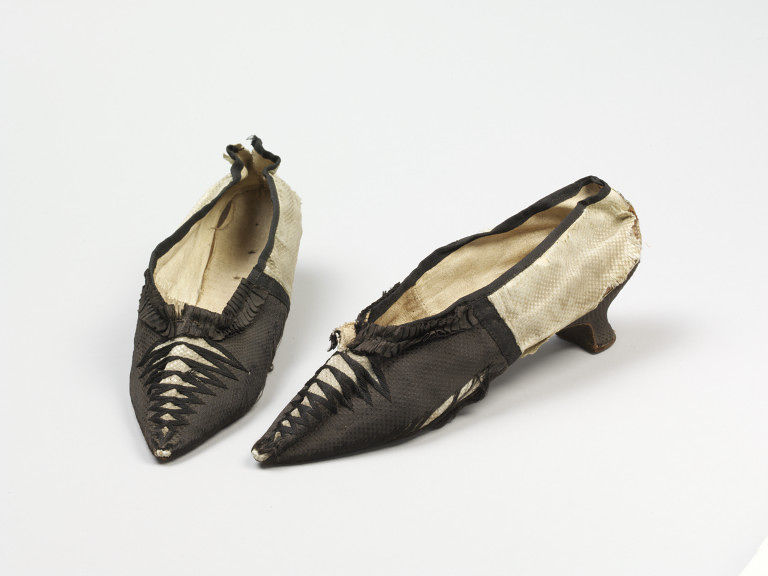
Shoes, 1790s, black and (very faded) blue.

Shoes would have been made of leather, possibly with cloth uppers. Experiments with country dancing demonstrations on paving show that the soft leather soles of my ballet shoes did not last long. Similar experiments on grass indicate that leather dancing shoes also don't do well on wet surfaces - they're slippery and not waterproof. At least country dancing does wonders for the strength of your ankles. While the paving may have been less of an issue (no tarmac or concrete roads), Lizzy definitely encountered plenty of mud.

Buckle up for a history of shoes from the V&A archives! (all images from V&A unless otherwise indicated). Caveats here are that I'm not a historian of any fashion, I have only researched museum collections online, and that utilitarian shoes are less likely to survive than pretty ones. 

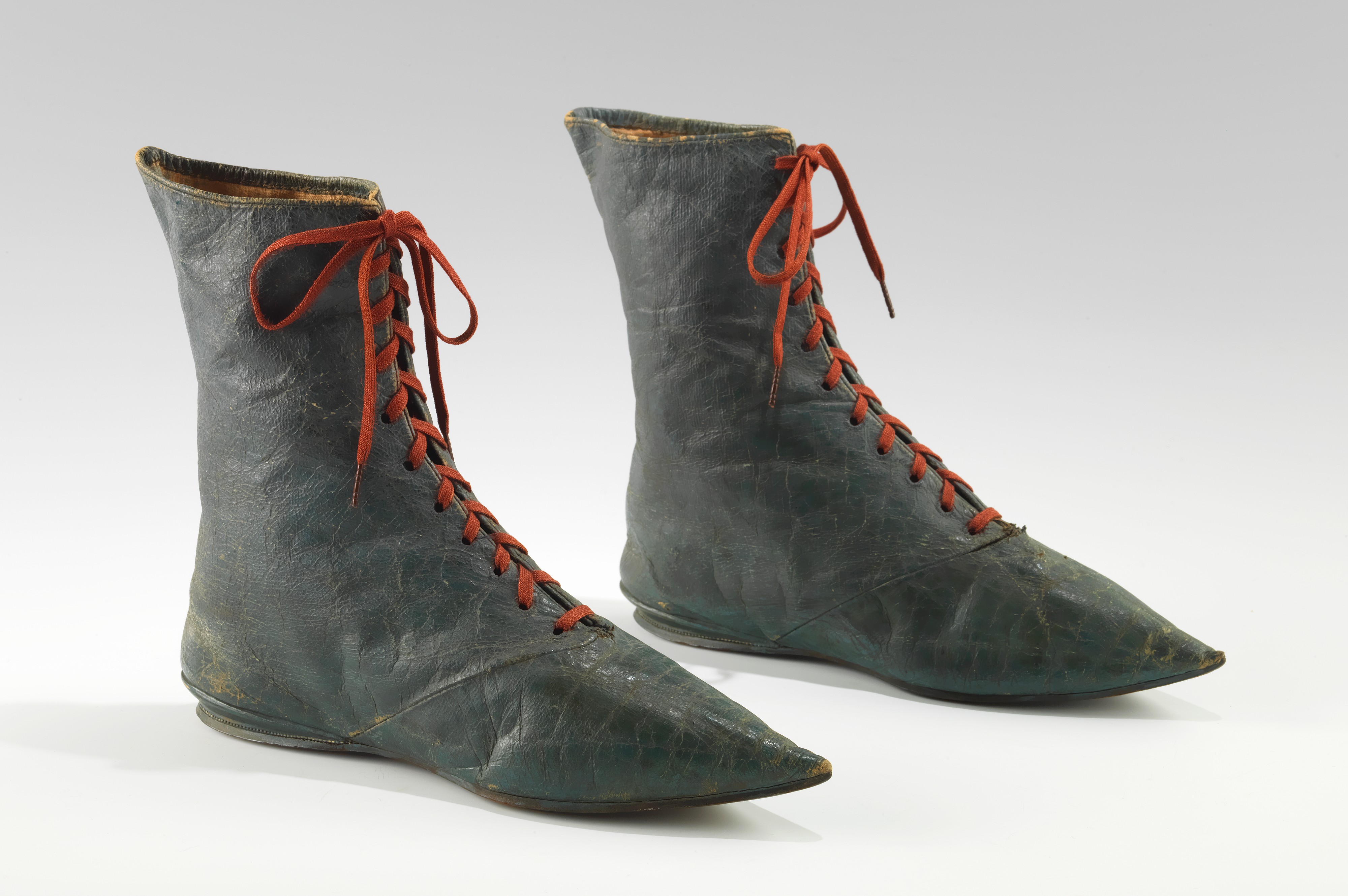
In the 1797, when Jane Austen was writing the first version of Pride and Prejudice, we have pointy toes and small heels (as opposed to big heels earlier in the century). Boots for ladies had been used for riding for a while, but now started to be used for other purposes. The American Duchess historical shoe blog seems to date their leather half-boots as accurate from 1790, and has leather Hessian-style boots for the same date. Maybe Elizabeth would have worn boots, like the ones from the Met below. 

Leather boots from 1795-1815, with pointy toes and a small heel. The Met museum


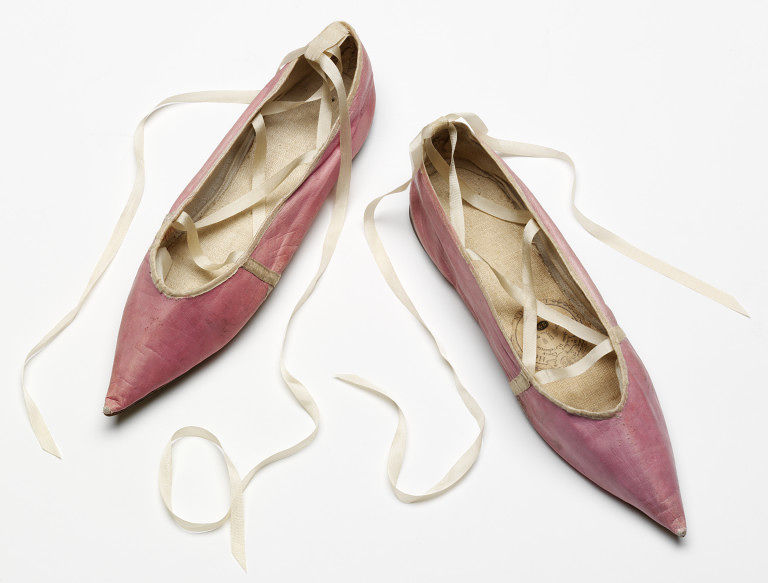
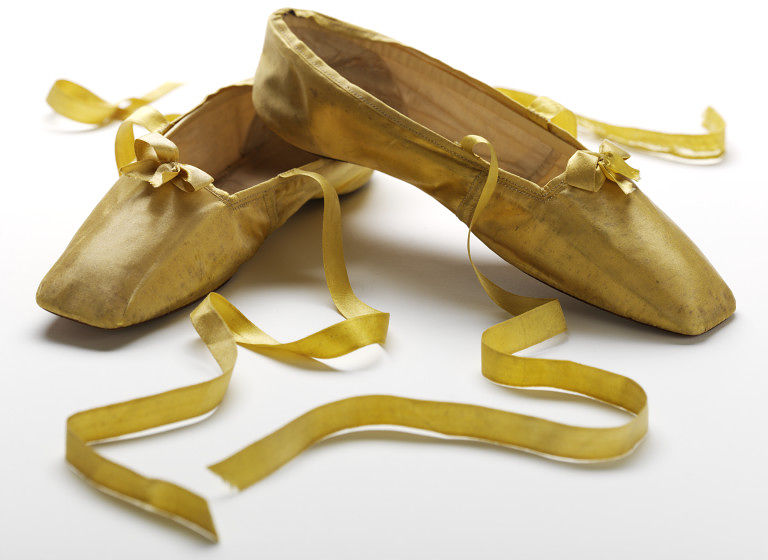
As we get into the 1800s shoes get simpler, with more rounded and later square toes and lower heels or entirely flat.  Still not something you'd go for a muddy walk in. They look more like ballet pointe shoes than a modern outdoor shoe, especially with the ribbons. Until the 1850s, this type of shoe (black or white mainly) was worn at formal occasions.  

White leather shoes worn by a bride in 1810

Yellow satin shoes with ribbons, 1820s

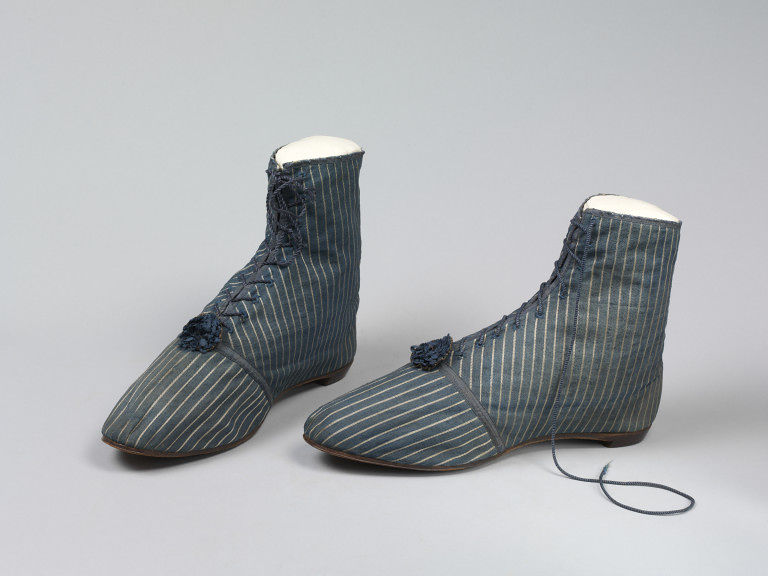
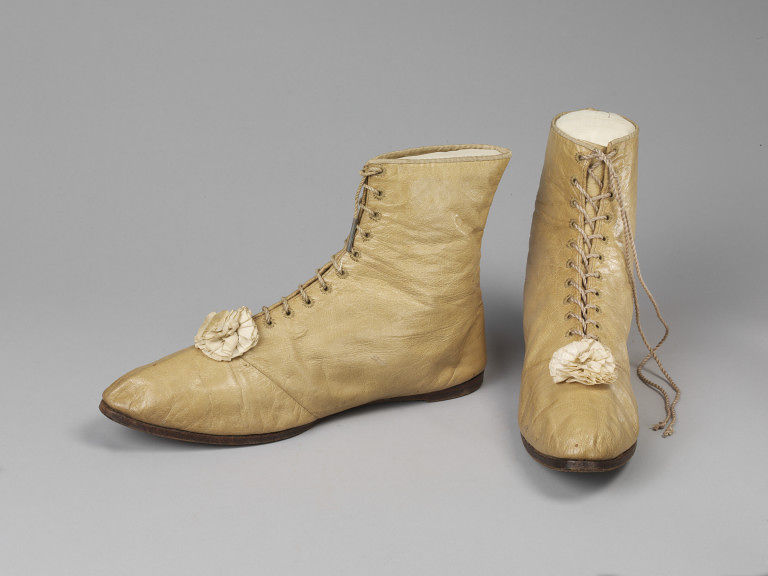
The good news is that at this point, boots become properly acceptable for women. They would have had leather soles and a kid leather or cotton upper. The cotton was a specific type from the Nanking region of China with a natural buff colour, and known as nankeen.

Ladies' half-boots in blue cotton

Kid (goat, not child) leather ladies' half-boots, 1815-1825

So what should I wear to best channel Lizzy on a three-mile walk to my local Netherfield? American Duchess tried to produce both leather and nankeen half-boots, but they are no longer in the collection and I suspect the shipping would have been prohibitive. I think the materials are more important to the experience than the exact style. Helpfully I seem to have found a modern 'nankeen half-boot' in high-top jazz dance shoes, with a leather sole, cotton lining and either cotton or leather upper. I will probably waterproof them with wax and possibly glue an extra leather sole on. For bonus points, they're affordable enough to potentially ruin on a muddy walk.

I totally recommend having a poke around the museum collections online, it certainly entertained me for a couple of evenings. I was absolutely astonished at how clumsy shoes look until the late 1800s.

Finally, two little asides I found in this rabbit hole: 

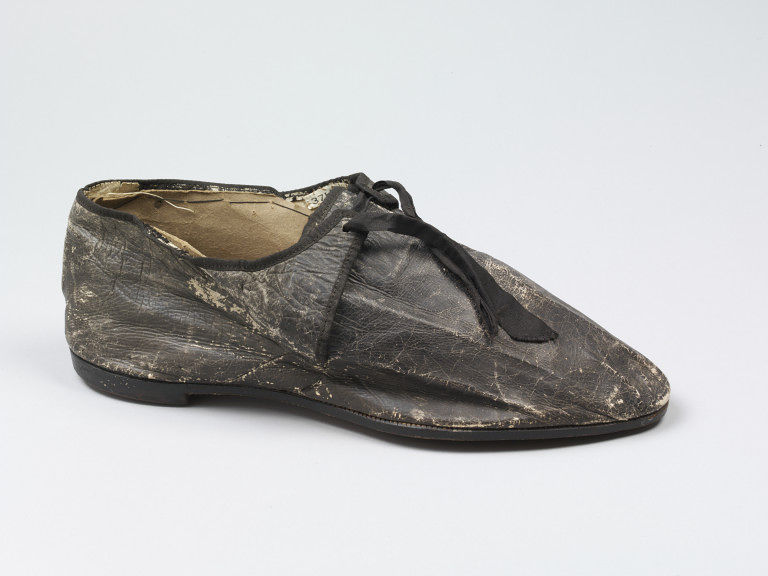
These mens' shoes look perfect for Mr Collins to tend to his garden in, and are some of the few examples available for men: 

A man's shoe, black with ribbon tie closure


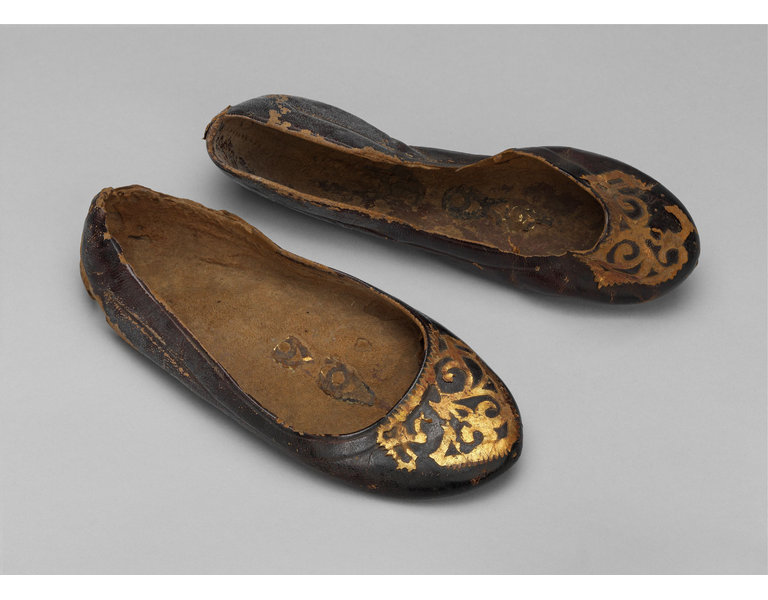
And a pair of 2000 year old shoes that honestly would look less out of place in a modern shoe shop than most of the other shoes in this post, and clumsy-looking later examples. I have a mighty need and may buy some leather flats to embellish with gold leaf (or paint). Because clearly I don't have enough projects.

pair of surprisingly modern-looking shoes, 30BC-300AD, Egypt.


14 August 2020

Saskia makes a start...

This project is entirely different from the crafting I usually do, but I've had it in my head for a long time now. 

I've been a Pride and Prejudice (and other Jane Austen novels) fan since I first saw the 1995 BBC mini-series with Colin Firth diving into the lake. I've re-read, re-watched, visited historical places. I used to hang around on the Republic of Pemberley, on and off for years. I've also done a fair amount of reading on daily life in the Georgian era when Jane Austen lived and set her novels. 

 In the novel, Mrs Bennet tries to defend the countryside to Mr Darcy by saying they "dined with four-and-twenty families in this neighbourhood"

In 2016, we moved to the countryside in England. There are houses here that still look like they did in 1800. We're surrouned by places called Such-and-such House and Somewhere Court and Grand Old Hall. So, logically, I started wondering: Definitely a Grand Old Hall

Who were Mrs Bennet's "four and twenty families"? 

Let's find out. Do some experimental history.

Starting with some disclaimers:

  • Not a historian. I'm a scientist, I'm used to Finding Stuff Out, but I've not been formally trained in historical research, dating buildings etc.
  • I'm in Worcestershire/Warwickshire, not Hertfordshire. Big Assumption One is that they would have been sufficiently similar at the time, and I could probably make a case for Hertfordshire having changed more in the intervening period because of its proximity to London, but I'm not going to bother. I will attempt to identify the houses where people suitable for the Bennet's to interact with would have lived.
  • COVID. I may not be able to access certain things/places for now. 
  • There is no timeline, this is a hobby. The whole thing may get abandoned, but interactions may help keep me motivated. 

Like all the best projects this one immediately grew several heads for every head I cut off. Or possibly tentacles. Index as follows:

  • I will start with an analysis of the characters mentioned in Pride and Prejudice and their social circles. There will probably be diagrams.
  • We'll discuss what 'genteel' is. I may pull in information from the other novels for this one because there is a wider range of examples. More diagrams. 
  • I will try to identify the houses in our "neighbourhood" and see which would have been considered "genteel enough". There may be maps, and more diagrams, and possibly diagrams on maps! 
  • I will attempt a 3-mile walk in my Regency dress at some point. It may not survive this.

I will try to remember to link the individual parts of the project in this post as I write them, and add other parts as they come up, but no promises!